
AI Retail Analytics & Business Intelligence Software
Artificial Intelligence is transforming retail analytics by turning massive amounts of sales, customer, inventory, traffic, and operational data into faster, more actionable business insights. AI-powered analytics platforms help retailers identify trends, uncover performance issues, predict future outcomes, and make smarter decisions across stores, digital channels, merchandising, marketing, and operations.
By combining advanced analytics, machine learning, predictive modeling, and generative AI, retailers can move beyond traditional dashboards and reporting to understand not only what happened, but why it happened and what actions to take next.
Everything You Need to Know About AI Retail Analytics
AI-powered retail analytics uses artificial intelligence to analyze sales, customer behavior, inventory, operations, marketing performance, and other business data to help retailers make faster, smarter decisions. AI can identify trends and patterns, uncover performance opportunities, forecast future outcomes, detect potential issues, and turn large amounts of retail data into actionable insights.
For retailers, the goal isn't simply to create more reports or dashboards. The real opportunity is to turn data into better decisions that improve sales, increase profitability, strengthen operational efficiency, better understand customers, identify opportunities earlier, and help retailers respond faster to changing business conditions.
Questions to Ask Before Choosing a Provider
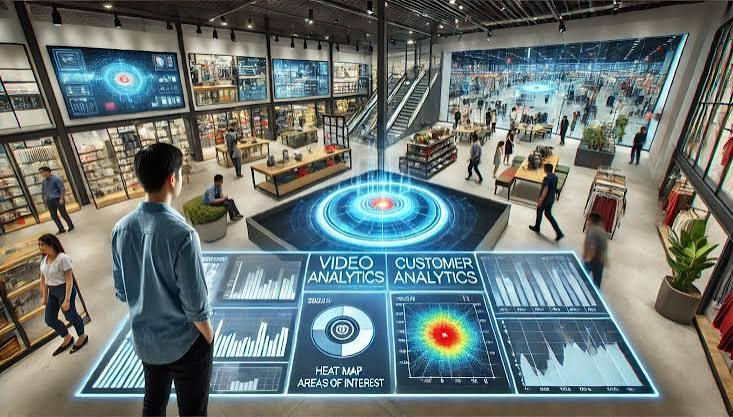
1.How effective are the analytics and insights?
How does the AI improve analysis compared with our current reporting and analytics processes?
How are results measured, and what outcomes have similar retailers achieved in sales, profitability, efficiency, and decision-making?
2. Will it integrate with our technology?
Does it integrate with our existing POS, ERP, e-commerce, CRM, loyalty, inventory, supply chain, and business intelligence systems? What additional integrations or technology will be required?
3. What data does the AI use?
What historical and real-time data is required for the system to work effectively?
Can it analyze sales, margins, inventory, customer behavior, promotions, product performance, operations, and other internal and external data?
4. What insights and recommendations can it provide?
Can the AI identify trends, performance gaps, unusual activity, risks, and growth opportunities?
Can it explain what is happening, why it is happening, and recommend actions employees can take to improve results?
5. How much can be automated?
Which analytics, reports, alerts, and recommendations can the AI generate automatically, and which require employee involvement? Can users customize dashboards, metrics, alerts, business rules, and reporting for different roles and departments?
6. What is the business case and ROI?
What is the total cost, including software, implementation, integration, training, and ongoing support?
What measurable improvements should we expect in sales, profitability, operational efficiency, decision-making, and employee productivity?
7. Can it reliably scale across our operation?
Can the platform support our number of stores, products, customers, transactions, markets, and sales channels?
How long does implementation typically take from pilot to full rollout, and what resources will our team need to provide?
Where AI Can improve Retail Analytics
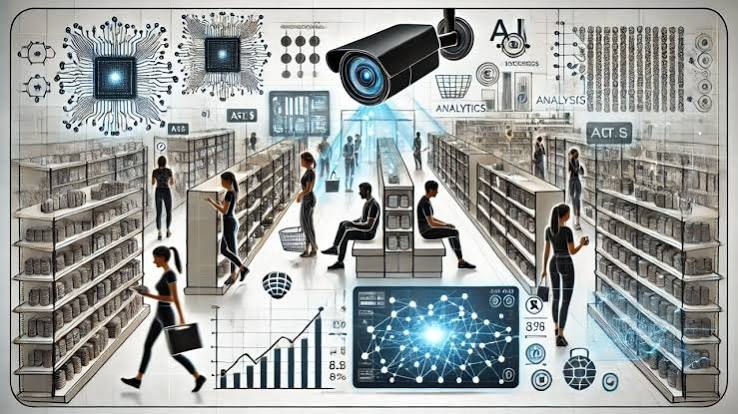
1. Sales & Performance Analysis
AI can analyze sales, revenue, margins, transactions, and other performance metrics across products, stores, regions, and channels to identify trends, understand performance, and uncover opportunities for growth.
2. Customer Behavior & Insights
AI can analyze purchase history, loyalty activity, shopping patterns, demographics, and other customer data to help retailers better understand customer preferences, behaviors, and changing needs.
3. Product & Merchandising Analytics
AI can evaluate product performance, assortment, categories, sales trends, margins, and customer demand to identify high-performing products, underperforming items, and opportunities to improve merchandising decisions.
4. Inventory & Supply Chain Analytics
AI can analyze inventory levels, product movement, demand, stockouts, overstocks, supplier performance, and other factors to help retailers improve product availability and inventory efficiency.
5. Store & Operational Analytics
AI can compare performance across stores, departments, regions, employees, and other areas to identify operational trends, performance gaps, and opportunities to improve efficiency and execution.
6. Predictive Analytics & Forecasting
AI can use historical and real-time data to predict sales, demand, customer activity, inventory needs, and other business outcomes, helping retailers anticipate changes and make more proactive decisions.
7. Automated Insights & Recommendations
AI can continuously analyze retail data to identify unusual activity, emerging trends, risks, and opportunities while delivering alerts, recommendations, and actionable insights that help teams make faster, more informed decisions.
Key AI Retail Analytics Challenges
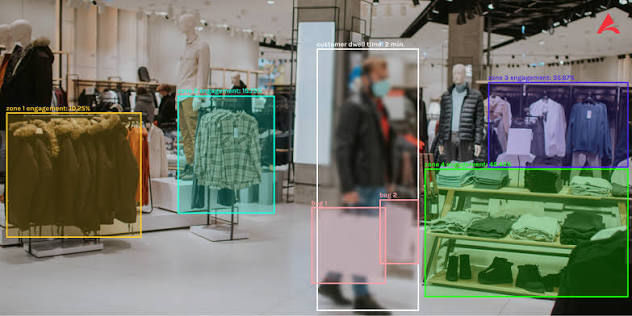
1. Data Quality & Accuracy
AI analytics depends on accurate sales, inventory, customer, product, operational, and financial data. Incomplete, inconsistent, or outdated data can produce misleading insights, forecasts, and recommendations.
2. System & Data Integration
The AI must connect effectively with POS, ERP, e-commerce, CRM, loyalty, inventory, supply chain, and other systems to create a complete and current view of retail performance.
3. Data Silos & Consistency
Retail data often exists across different departments, locations, channels, and technology platforms. Retailers need consistent definitions and data standards to ensure AI analyzes information correctly across the organization.
4. Understanding AI-Generated Insights
AI can identify complex patterns and relationships that may not always be easy to explain. Retailers need to understand why the system is generating an insight or recommendation before making important business decisions.
5. Data Privacy & Security
Retail analytics may use customer, transaction, employee, and other sensitive data. Retailers need appropriate security, privacy, access controls, and governance to protect information and meet regulatory requirements.
6. Automation vs. Human Oversight
Not every insight or recommendation should automatically result in action. Retailers need to determine which decisions AI can support or automate and when employees should review, validate, or override recommendations.
7. Employee Adoption & Change Management
Merchants, analysts, operators, marketers, and other employees need to understand how the technology works, how to use AI-generated insights, and how their responsibilities change as AI becomes more involved in business decisions.
How AI Retail Analytics Works
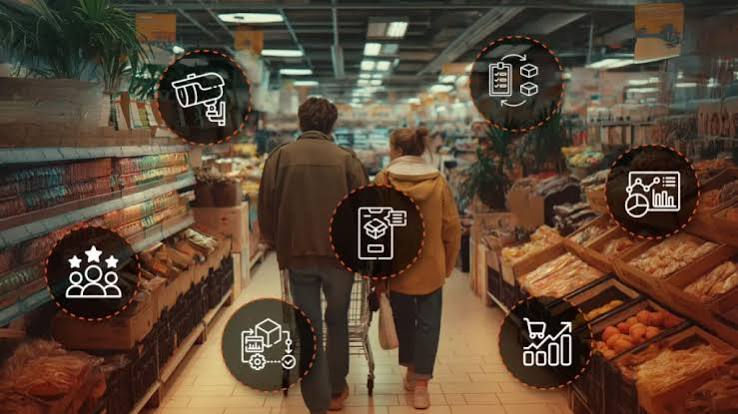
1. Retail Data is Collected
AI connects data from POS systems, e-commerce, inventory, CRM, loyalty programs, marketing platforms, supply chain systems, and other sources to create a more complete view of retail performance.
2. AI Analyzes Business Performance
AI analyzes sales, margins, transactions, inventory, customer behavior, promotions, store performance, product trends, and other business metrics to identify patterns and understand what is driving results.
3. Trends & Patterns Are Identified
The system identifies emerging trends, changes in customer behavior, product performance, sales patterns, operational issues, and other insights that may be difficult to identify through traditional reporting.
4. Future Performance is Predicted
AI uses historical and real-time data to forecast sales, demand, customer activity, inventory needs, and other business outcomes, helping retailers anticipate opportunities and potential challenges.
5. Opportunities & Exceptions Are Identified
AI identifies growth opportunities, underperforming products or locations, unusual activity, changing customer trends, inventory issues, and other conditions that may require attention or action.
6. Insights & Recommendations Are Delivered
The system turns complex retail data into dashboards, alerts, reports, and recommendations that help teams understand what is happening, why it is happening, and where action may be needed.
7. Teams Take Action & AI Continues LearningEmployees use AI-generated insights to make decisions across merchandising, operations, marketing, inventory, and other areas while the AI learns from new data and business outcomes to continuously improve future analysis and recommendations.


Featured Provider:
RetailNext
RetailNext is a leading retail analytics platform built specifically for physical stores. The platform combines in-store traffic analytics, shopper behavior, asset protection, and business intelligence to help retailers better understand how customers interact with their stores and improve operational performance.
Its Pulse AI capability allows retail teams to ask questions about store performance in natural language and receive answers based on their own retail data. RetailNext says its platform is trusted by more than 600 retailers across 100+ countries.

Top Benefits
📊 Real-Time Performance Analytics
Combines sales, traffic, conversion, and operational data to provide retailers with a clearer view of business performance across stores and channels.
🤖 AI-Powered Insights
Uses artificial intelligence and machine learning to analyze large datasets, identify patterns, surface anomalies, and uncover insights that may be difficult to detect through traditional reporting.
🔮 Predictive Analytics
Analyzes historical and real-time data to anticipate future trends, customer demand, store performance, and potential business opportunities.
🛍️ Shopper & Store Intelligence
Helps retailers understand customer traffic, shopping behavior, conversion, store engagement, and other factors influencing physical store performance.
📈 Faster Decision-Making
Transforms complex retail data into dashboards, recommendations, alerts, and natural-language answers that help business leaders make informed decisions faster.
🔗 Unified Retail Data
Connects information from POS, inventory, e-commerce, customer, operational, and other retail systems to create a more comprehensive view of business performance.
Existing Customers




Target Verticals

Other Leading Retail Analytics AI Providers
The companies below help retailers transform sales, customer, location, inventory, and operational data into actionable insights using AI-powered analytics, predictive intelligence, and business intelligence tools.

ThoughtSpot

Impact Analytics

Placer.ai
ThoughtSpot's retail platform can connect data from POS, inventory, e-commerce and supply-chain systems, while its Spotter analytics agent is designed to provide natural-language answers grounded in enterprise data.
Impact Analytics, AI-native retail analytics platform that combines business intelligence, predictive analytics, and machine learning to help retailers improve decision-making across merchandising, inventory, pricing, planning, and operations.
Placer.ai, an AI-powered location intelligence and retail analytics platform that analyzes foot traffic, consumer behavior, trade areas, and market trends to help retailers optimize store performance, site selection, marketing, and expansion strategies.
