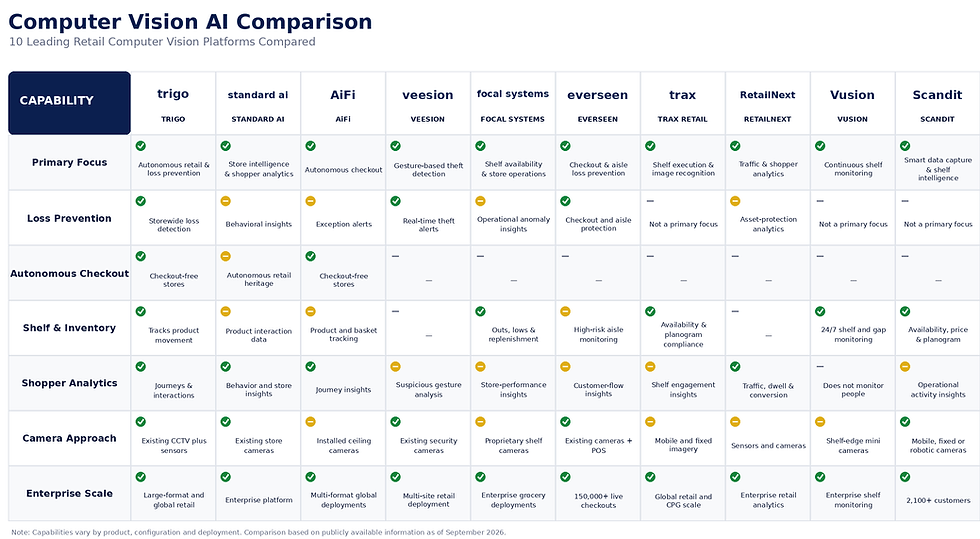
Computer Vision AI for Retail
Computer Vision AI helps retailers understand what is happening throughout their stores in real time. By analyzing video from existing cameras, these platforms can identify product movement, shopper behavior, shelf conditions, checkout activity, and potential loss events.
Unlike traditional surveillance systems that primarily record footage for later review, Computer Vision AI continuously interprets in-store activity and converts it into actionable operational insights. Retailers can use these insights to improve inventory visibility, reduce shrink, monitor merchandising execution, analyze customer traffic, and optimize store performance.
From detecting out-of-stock products and measuring shelf engagement to identifying suspicious activity and supporting autonomous stores, Computer Vision AI provides retailers with greater visibility across the entire physical shopping environment.
Everything You Need to Know About AI Computer Vision
AI-powered computer vision uses artificial intelligence to analyze images and video from cameras to understand what is happening in stores, restaurants, warehouses, and other retail environments. AI can identify objects, products, people, movement, interactions, and events to help retailers monitor operations, understand customer behavior, improve safety, and automate processes in real time.
For retailers, the goal isn't simply to add more cameras or collect more video. The real opportunity is to turn visual information into actionable insights that improve operational efficiency, reduce losses, enhance customer experiences, increase visibility across locations, and help employees respond faster to issues and opportunities.
Questions to Ask Before Choosing a Provider
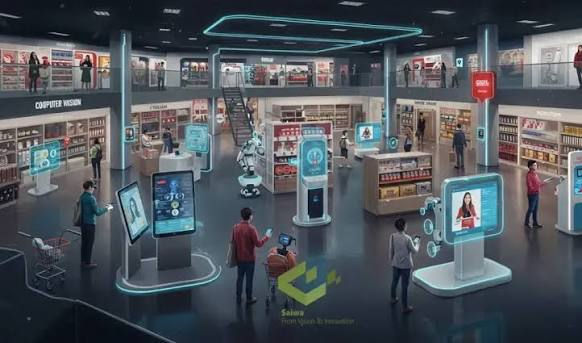
1.How accurate is the computer vision?
How accurately does the AI identify products, people, activities, and events in real-world retail environments?
How are false positives and missed events measured, and what accuracy levels have similar retailers achieved?
2. Will it integrate with our technology?
Does it integrate with our existing cameras, POS, inventory, security, workforce, and other retail systems?
Can we use our current camera infrastructure, or will additional hardware and technology be required?
3. What can the AI detect and analyze?
Which objects, behaviors, events, and operational conditions can the system identify?
Can it support loss prevention, checkout monitoring, customer traffic, shelf availability, safety, and other computer vision applications?
4. How does it perform in different store environments?
How does the AI perform with different lighting, store layouts, camera angles, crowds, blocked views, and operating conditions?
How much configuration or training is required for each location?
5. How are privacy, security, and compliance managed?
How is video and customer data collected, processed, stored, and protected?
What privacy controls, security safeguards, retention policies, and compliance capabilities are built into the platform?
6. What is the business case and ROI?
What is the total cost, including software, cameras, infrastructure, integration, implementation, training, and ongoing support?
What measurable improvements should we expect in shrink, productivity, inventory, safety, and customer experience?
7. Can it reliably scale across our operation?
Can the platform support our number of stores, cameras, locations, and use cases?
How long does implementation typically take from pilot to full rollout, and what resources will our team need to provide?
Where AI Can improve Compuer Vision
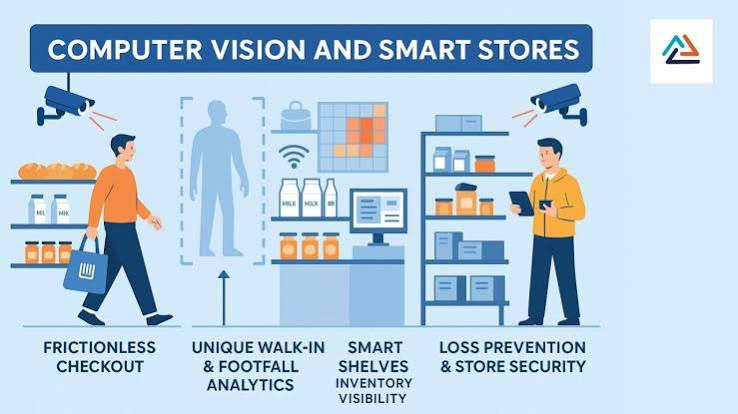
1. Loss & Theft Prevention
AI computer vision can monitor activity throughout stores to identify suspicious behaviors, potential theft, unusual product movement, and other events that may indicate loss or require employee attention.
2. Checkout Monitoring
AI can analyze checkout activity to identify missed scans, incorrect product entries, barcode switching, sweethearting, and other checkout exceptions while helping retailers improve transaction accuracy and reduce shrink.
3. Customer Traffic & Behavior
Computer vision can analyze customer traffic, movement, dwell time, and interactions throughout the store, helping retailers understand how shoppers navigate locations and engage with products and displays.
4. Shelf & Inventory Monitoring
AI can monitor shelves and displays to identify out-of-stocks, low inventory, misplaced products, and merchandising issues, helping employees respond faster and improve product availability.
5. Store Operations & Productivity
Computer vision can identify operational conditions such as long checkout lines, unattended areas, workflow bottlenecks, and other issues, helping retailers improve staffing, productivity, and overall store execution.
6. Safety & Security
AI can detect potential safety concerns, restricted-area access, unusual activity, spills, blocked aisles, and other hazards, allowing employees to respond more quickly and create safer retail environments.
7. Customer Experience & Store Analytics
Retailers can use computer vision insights to understand traffic patterns, wait times, product engagement, store layouts, and service levels, helping improve store design, customer experiences, and operational decisions.
Key AI Computer Vision Challenges
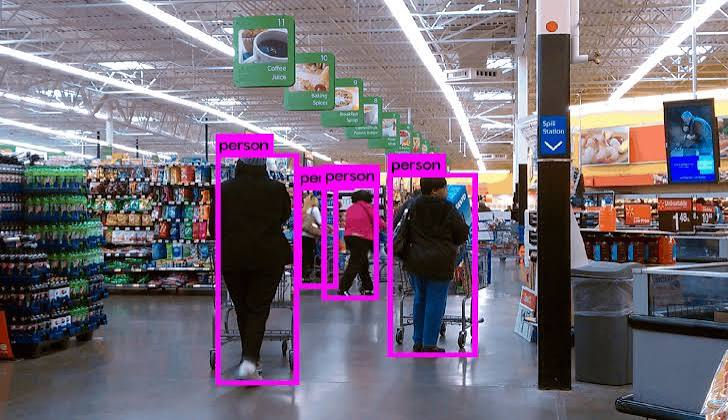
1. Accuracy & False Detection
AI computer vision must accurately identify products, people, objects, and activities across different environments. Poor lighting, crowded stores, blocked camera views, or unusual behaviors can lead to missed events or false alerts.
2. System Integration
The AI must connect effectively with existing cameras, POS, inventory, security, workforce, and other retail systems to combine visual information with operational data and provide useful insights.
3. Camera Coverage & Infrastructure
Computer vision depends on cameras being positioned correctly and providing sufficient image quality. Retailers may need to upgrade cameras, networks, processing capabilities, or other infrastructure to achieve reliable coverage.
4. Privacy & Customer Concerns
Computer vision can raise concerns about how customers and employees are monitored and how video data is collected, stored, and analyzed. Retailers need clear policies and appropriate privacy and security safeguards.
5. Different Store Environments
Lighting, layouts, product displays, traffic patterns, camera placement, and operating conditions can vary significantly between locations, making it challenging for computer vision to perform consistently across an entire retail operation.
6.Alerts & Employee Response
Too many alerts or inaccurate notifications can overwhelm employees and reduce confidence in the technology. Retailers need to determine which events require immediate action and establish clear processes for responding.
7. Cost, Scale & ROI
Cameras, software, infrastructure, integration, implementation, and ongoing support can create significant costs. Retailers need to determine whether improvements in shrink, operations, inventory, safety, and customer experience justify the investment.
How AI Computer Vision Works
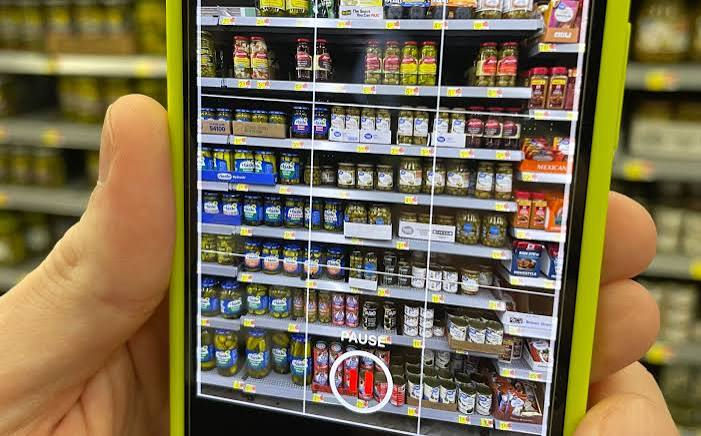
1. Images & Video Are Captured
Cameras and other visual sensors capture images or video from stores, restaurants, warehouses, parking areas, and other locations, providing the visual information the AI needs to analyze activity.
2. Visual Data is Analyzed
AI processes the images and video to recognize products, objects, people, movement, locations, and other visual details while distinguishing between different activities occurring within the environment.
3. Objects & Activities Are Identified
Computer vision identifies specific objects and events such as products being picked up, customers entering an area, checkout activity, inventory movement, employee actions, or potentially unusual behavior.
4. Patterns & Behaviors Are RecognizedAI analyzes movement and interactions over time to identify patterns in customer traffic, shopping behavior, operational processes, product activity, and other events that may provide useful business insights.
5. Events & Exceptions Are Detected
The system can identify predefined events or unusual activity, such as potential theft, empty shelves, long lines, safety concerns, operational issues, or other situations requiring attention.
6. Alerts & Insights Are Generated
When important events are detected, AI can provide real-time alerts, dashboards, analytics, or recommendations that help employees understand what is happening and determine the appropriate response.
7. Results Improve Future Decisions
Retailers can analyze computer vision data, alerts, patterns, and outcomes to improve store operations, loss prevention, customer experiences, staffing, inventory visibility, and other business decisions.


Featured Provider:
Computer Vision - Trigo
Trigo is a leading Computer Vision AI company that helps retailers transform existing stores into intelligent retail environments. Its platform uses AI-powered computer vision and existing CCTV infrastructure to deliver loss prevention, autonomous checkout, and retail intelligence without requiring retailers to replace their current store layouts.
Rather than relying on facial recognition, Trigo uses privacy-first, non-biometric technology to anonymously track shopper and product interactions throughout the store. The platform enables retailers to reduce shrink, improve operational efficiency, gain real-time store insights, and create frictionless shopping experiences while integrating with existing POS and store systems.

Core Benefits
📹 Smarter Loss Prevention
Detects concealed merchandise, self-checkout mis-scans, sweethearting, and unpaid items using AI-powered computer vision across the entire shopping journey.
📦 Improved Inventory Visibility
Tracks product movement throughout the store to help retailers better understand inventory availability, merchandising effectiveness, and shopper behavior.
🛒 Frictionless Checkout
Enables autonomous shopping experiences where customers simply pick up products and leave without traditional checkout lines.
⚡ Works With Existing Stores
Deploys using existing CCTV infrastructure, reducing hardware investments while allowing retailers to modernize stores faster.
📊 Real-Time Retail Intelligence
Provides actionable insights into shopper traffic, product interactions, basket behavior, shelf engagement, and store performance.
🔒 Privacy-First AI
Uses non-biometric computer vision technology designed to protect customer privacy while remaining compliant with privacy regulations.
Existing Customers


Target Verticals

Other Leading Computer Vision AI Providers
The companies below help retailers transform store operations with AI-powered computer vision, shopper analytics, autonomous shopping, loss prevention, and real-time operational insights.

Standard AI
AI-powered computer vision platform that delivers real-time shopper behavior analytics, store operations insights, and autonomous retail intelligence using existing in-store cameras.

AiFi
AI-powered autonomous retail platform that uses computer vision and spatial intelligence to enable checkout-free shopping, real-time store analytics, and frictionless customer experiences.

Veesion
AI-powered computer vision platform that analyzes existing security camera footage to detect suspicious behavior, reduce retail shrink, and improve in-store loss prevention without requiring additional hardware.
Focal Systems

Everseen

Trax Retail
AI-powered retail computer vision platform that uses shelf-mounted cameras and deep learning to provide real-time visibility into products, inventory, out-of-stocks, shelf conditions, and store operations, helping retailers improve availability, productivity, and profitability.
AI-powered retail computer vision platform that analyzes activity across checkout, shelves, aisles, and store operations to detect loss, identify unusual behavior, improve operational visibility, and help retailers reduce shrink and improve performance.
AI-powered retail computer vision and image recognition platform that digitizes physical shelves, identifies products and displays, monitors availability and compliance, and converts in-store images into actionable insights for retailers and consumer brands.

Scandit
RetailNext
Mashgin
AI-powered smart data capture and computer vision platform that helps retailers analyze products, shelves, labels, inventory, and store conditions to identify stock gaps, pricing errors, misplaced products, and other operational issues in real time.
AI-powered retail analytics and computer vision platform that uses in-store sensors and video analytics to measure customer traffic, shopper behavior, conversion, store performance, and operational activity across physical retail locations.
AI-powered autonomous checkout platform that uses computer vision and machine learning to instantly recognize multiple products without scanning barcodes, enabling faster checkout experiences across convenience stores, stadiums, airports, cafeterias, and other retail environments.