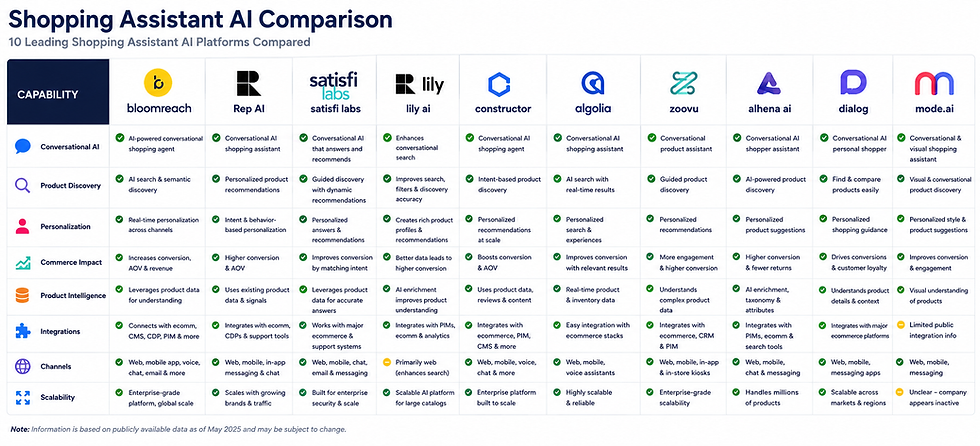
AI Shopping Assistants
AI Shopping Assistants That Personalize Every Shopping Experience
AI shopping assistants help retailers deliver personalized product recommendations, conversational shopping experiences, and intelligent product discovery. Using generative AI, natural language processing, and customer data, these platforms guide shoppers through the buying journey, improve engagement, and increase conversion rates across digital and omnichannel retail environments.
Everything You Need to Know About AI Shopping Assistant
AI-powered shopping assistants use artificial intelligence to understand customer intent, answer product questions, provide personalized recommendations, compare products, and help shoppers discover the right items through natural, conversational interactions. They can use product catalogs, customer preferences, purchase history, reviews, inventory, pricing, and other retail data to guide customers throughout the shopping journey.
For retailers, the goal isn't simply to replace traditional search or add another chatbot. The real opportunity is to create a more personalized and intuitive shopping experience that improves product discovery, increases conversion, reduces customer uncertainty, strengthens engagement, and helps shoppers make faster, more confident purchasing decisions.
Questions to Ask Before Choosing a Provider

1.How effective are the product recommendations?
How does the AI improve product discovery compared with our current search and recommendation tools?
How is recommendation quality measured, and what results have similar retailers achieved in conversion, average order value, engagement, and customer satisfaction?
2. Will it integrate with our technology?
Does it integrate with our existing e-commerce, POS, inventory, CRM, product information, and order management systems?
What additional integrations or technology will be required?
3. What data does the AI use?
What product, customer, and behavioral data is required for the system to work effectively?
Can it incorporate product catalogs, pricing, inventory availability, reviews, purchase history, browsing behavior, promotions, and other relevant information?
4. How well does it understand and assist customers?
Can customers ask questions naturally, describe what they are looking for, compare products, and receive relevant recommendations?
How well does the AI handle complex questions, follow-up questions, and multi-turn conversations?
5. How accurate and controllable are the AI responses?
How does the platform reduce inaccurate information and hallucinations?
Can we establish rules and guardrails around products, brands, pricing, promotions, inventory, recommendations, and the information the assistant is allowed to provide?
6. What is the business case and ROI?
What is the total cost, including software, implementation, integration, training, and ongoing support?
What measurable improvements should we expect in conversion, average order value, engagement, customer satisfaction, employee productivity, and sales?
7. Can it reliably scale across our operation?
Can the platform support our number of products, customers, languages, locations, and sales channels?
How long does implementation typically take from pilot to full rollout, and what resources will our team need to provide?
Where AI Can improve Shopping Assistants
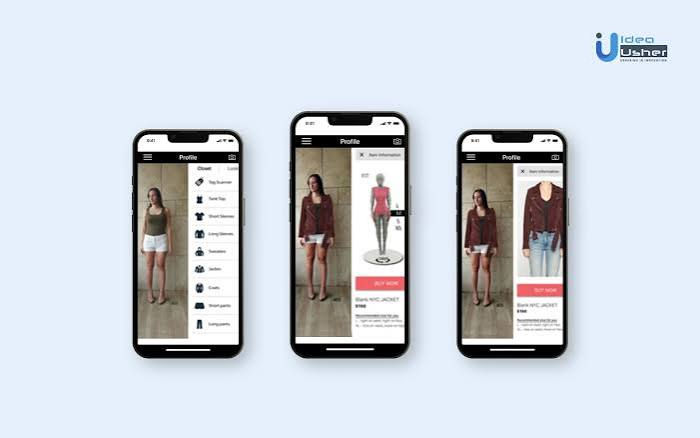
1. Personalized Product Recommendations
AI can analyze customer preferences, browsing behavior, purchase history, stated needs, and other available data to recommend products that are most relevant to each shopper.
2. Conversational Product Search
Customers can describe what they are looking for using natural language, allowing AI to understand their intent and identify relevant products without relying on traditional keywords, filters, or navigation.
3. Product Comparison
AI can compare products across features, specifications, pricing, reviews, availability, and other factors, helping customers quickly understand differences and determine which option best fits their needs.
4. Product Discovery
AI can help shoppers discover products they may not have found through traditional search by understanding their needs and suggesting relevant alternatives, complementary products, or new options.
5. Personalized Questions & Answers
Customers can ask detailed questions about products, features, sizing, compatibility, availability, policies, and other information and receive immediate answers tailored to their specific shopping needs.
6. Cross-Selling & Upselling
AI can recommend complementary products, accessories, bundles, or upgrades based on what a customer is considering, helping retailers increase basket size while providing shoppers with relevant suggestions.
7. Shopping Journey & Conversion
AI can guide customers from initial product discovery through comparison and purchase, reducing uncertainty and friction while helping retailers improve engagement, conversion rates, and the overall customer experience.
Key AI Shopping Assistant Challenges

1. Data Quality & Accuracy
AI shopping assistants depend on accurate product descriptions, specifications, pricing, inventory, reviews, policies, and other data. Incorrect or outdated information can lead to poor recommendations or inaccurate customer responses.
2. System Integration
The AI must connect effectively with existing e-commerce, POS, inventory, CRM, product information, order management, and other systems to provide customers with complete and current information.
3. Understanding Customer Intent
Customers may ask vague, complex, or highly specific questions. AI needs to understand conversational language, context, preferences, and changing requirements to recommend products that actually match customer needs.
4. Recommendation Quality & Relevance
Poor or overly repetitive recommendations can frustrate shoppers and reduce trust. Retailers need to ensure AI provides relevant suggestions rather than simply promoting popular, sponsored, or higher-priced products.
5. AI Accuracy & Hallucinations
Generative AI can occasionally provide incorrect product information, misunderstand questions, or generate answers not supported by retailer data. Strong safeguards are needed to reduce inaccurate or misleading responses.
6. Privacy & Customer Data
Personalized shopping experiences may use browsing behavior, purchase history, preferences, and other customer information. Retailers need to manage this data responsibly while maintaining security, privacy, and regulatory compliance.
7. Automation vs. Human Assistance
AI cannot effectively handle every shopping situation. Retailers need to determine when the assistant should continue helping the customer and when complex questions, complaints, or other situations should be transferred to an employee.
How AI Shopping Assistant Works

1. Customer Intent is Understood
AI analyzes a shopper’s questions, search terms, browsing behavior, preferences, and conversation to understand what they are looking for, their needs, and the type of products that may be most relevant.
2. Product & Customer Data is Analyzed
The system connects product catalogs, descriptions, pricing, inventory, reviews, purchase history, customer profiles, and other available data to understand products and personalize the shopping experience.
3. Relevant Products Are Identified
AI searches available products and identifies options that best match the shopper’s needs, preferences, budget, product requirements, availability, and other criteria discussed during the interaction.
4. Personalized Recommendations Are Provided
The assistant recommends relevant products, alternatives, complementary items, and potential upgrades while explaining why specific products may be a good fit based on the customer’s needs and preferences.
5. Questions & Comparisons Are Answered
Customers can ask follow-up questions, compare products, explore features, understand differences, and refine their requirements through a natural conversation instead of repeatedly searching or filtering products.
6. Customers Are Guided Toward Purchase
AI helps shoppers narrow their choices, check pricing and availability, discover relevant promotions, and navigate toward the appropriate product page, shopping cart, store, or other next step in the buying journey.
7. Interactions Improve Future Experiences
The system analyzes customer interactions, recommendations, engagement, and purchasing outcomes to improve future responses while retailers use the insights to better understand customer needs, product interest, and shopping behavior.


Featured Provider: Bloomreach
Bloomreach combines conversational AI, intelligent search, merchandising, and personalization to deliver AI-powered shopping assistants that help retailers improve product discovery, increase conversions, and create highly personalized shopping experiences.

Core Benefits
🔍 AI-Powered Search
Uses AI to understand shopper intent and deliver highly relevant search results, helping customers quickly find the products they're looking for.
🎯 Personalized Recommendations
Analyzes customer behavior, preferences, and purchase history to deliver personalized product recommendations that increase conversions and average order value.
💬 Conversational Shopping
Provides AI-powered shopping assistants that answer questions, guide product discovery, and deliver personalized shopping experiences through natural conversations.
🛒 Intelligent Merchandising
Optimizes product rankings, promotions, and category displays using AI to present the most relevant products based on shopper behavior and business goals.
📈 Real-Time Customer Insights
Continuously analyzes shopper interactions to uncover buying trends, optimize merchandising strategies, and improve customer engagement across digital channels.
🚀 Higher Conversion Rates
Combines AI search, personalization, merchandising, and conversational commerce to reduce friction, increase customer satisfaction, and drive higher online sales.
Existing Customers




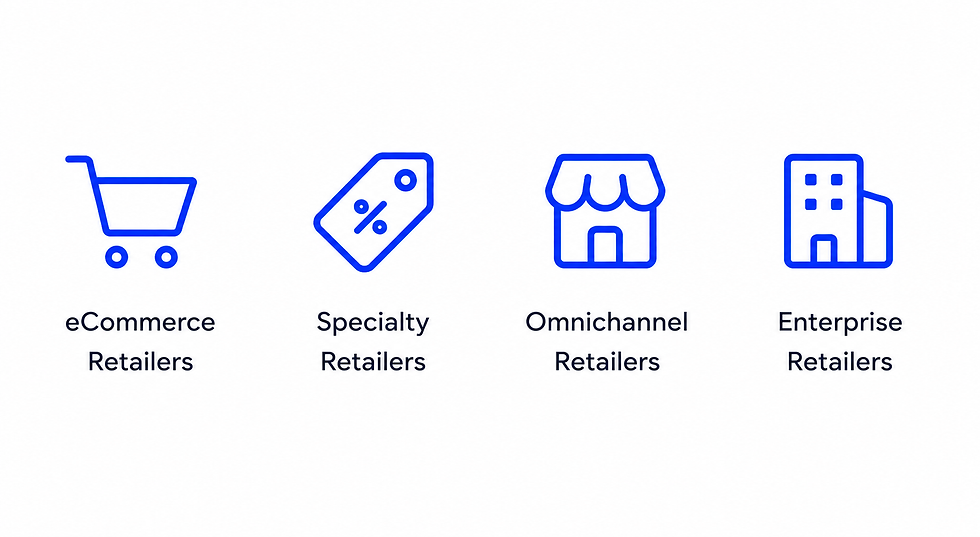
Target Verticals
Other Leading AI Shopping Assistants
The companies below help retailers enhance digital shopping experiences with AI-powered shopping assistants, conversational commerce, personalized product recommendations, and intelligent product discovery.

Satisfi Labs
AI-powered shopping assistants that help retailers answer customer questions, guide product discovery, deliver personalized recommendations, and improve customer engagement across websites and mobile experiences.

Lily AI
AI-powered product intelligence platform that enriches product data to improve search, personalization, product recommendations, and customer discovery across enterprise retailers.

Rep AI
AI-powered shopping assistant platform that uses conversational AI to engage shoppers, recommend products, answer questions, and increase ecommerce conversion rates and average order value.

Constructor

Algolia
Netcore UnBxd
AI-powered shopping assistants that help retailers answer customer questions, guide product discovery, deliver personalized recommendations, and improve customer engagement across websites and mobile experiences.
AI-powered shopping assistant and product discovery platform that uses conversational AI and real-time retail data to understand shopper intent, recommend relevant products, answer product questions, and guide customers from discovery toward purchase.
AI-powered product discovery and shopping assistant platform that uses conversational AI, intelligent search, personalization, and product recommendations to understand shopper intent, help customers find relevant products, and improve ecommerce conversion.

Zoovu

Alhena AI

Dialog
AI-powered shopping assistants that help retailers answer customer questions, guide product discovery, deliver personalized recommendations, and improve customer engagement across websites and mobile experiences.
AI-powered shopping assistants that help retailers answer customer questions, guide product discovery, deliver personalized recommendations, and improve customer engagement across websites and mobile experiences.
AI-powered personal shopping platform that uses conversational AI to understand customer needs, answer product questions, compare options, deliver personalized recommendations, and guide shoppers toward the right products and purchase.